

-
 Senator Blakespear joins the show to discuss her legislative work to protect California’s environment and her thoughts on Prop. 45.
 -
 Unknown/FilmToday, the terms PTSD or moral injury would be something closer to what is considered the original usage of “Post-Vietnam Syndrome.”
 -
 submittedLil Milagro Henriquez, founder of the Mycelium Youth Network, wants climate solutions to be fun, accessible to young people, and believes gaming could be a great climate solution.
 -
 This week we’re featuring another recording from the Good Evening Music Series of “Don’t: Won’t” by local singer-songwriter Hannah Rose Lee.
 -
 Sgt. Boston Corbett's story has a little bit of everything: vigilante justice, celebrity status, mental health challenges, poor working conditions and "divine providence".
 -
The Northern California Association of Nonprofits, or NorCAN, helps to connect, strengthen, and support local nonprofits. Learn about nonprofit organizations, and the work they do each week with the Good Work Series!
-
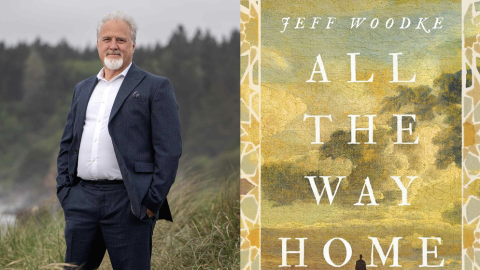 This week we sat down with local author and poet Jeff Woodke to learn more about his experience as a hostage and his new book, All the Way Home.
 -
 Aurore Marechal/Getty Images; Amy Sussman/Getty Images; Chad Salvador/Variety via Getty ImagesPlus, this week saw comings and goings at the White House, the revenge of a child (reality) star, and Elon Musk doing Elon Musk things.


News
-
 Cal Poly Humboldt Professors Andrew Stubblefield, Rosemary Sherriff, and Jennifer Marlow join the program to discuss California's Fifth Climate Assessment.
 -
 The Northern California Association of Nonprofits, or NorCAN, helps to connect, strengthen, and support local nonprofits. Learn about nonprofit organizations, and the work they do each week with the Good Work Series!
 -
 A federal judge ruled late Tuesday that President Trump cannot ban news organizations from covering him at the White House because he does not like the nature of their coverage - at least, not until the matter goes to a formal trial.
 -
 With Election Day just a few weeks away — and millions of votes already cast — midterm polls are everywhere. While polling can be a helpful tool to understand the electorate, it's not a crystal ball.
 -
 Plus: Nobels! Protests! Ambiguous quotes! A mysterious death in Russia!


-
 Kin Cheung/APKane was followed in the voting by Kylian Mbappé. Spain star Alexia Putellas won her third women's Ballon d'Or. Outside, fans packed the streets and climbed light poles near the London Palladium.
 -
 Frank Franklin II/APThe NFL, Apple Music and Roc Nation announced Monday night that Jay-Z will be the featured performer for the halftime festivities on Feb. 14 at SoFi Stadium in Inglewood, California.
 -
 Ashley Landis/APThe Milwaukee Brewers are one victory from their first World Series title after routing the Tampa Bay Rays 10-1 on Monday night thanks to a trio of young players who have shined in October.
 -
 Ukrainian 34th Separate Marine B/via APA localized ceasefire between Ukraine and Russia took effect early Tuesday ahead of a humanitarian mission brokered by U.S. first lady Melania Trump, as missile attacks resumed in Kyiv.
 -
 Jacquelyn Martin/APPresident Trump campaigned Monday in Mississippi, as he continued a closing midterm rally blitz that has highlighted Republicans' challenges ahead of an election that could drastically shift power in Washington.
 -
 Oded Balilty/APIsrael is holding its first elections since the Hamas-led attacks of 2023 triggered a chain of conflicts across the region — a quick guide the key players, issues and when to expect a result.


